
Module 1 · Part 1
Consultation
The foundation of every successful tape hair appointment.
Invisible Tape shown at true proportion — 4 × 0.8 cm

The consultation has one goal
Can this client safely and successfully wear tape extensions?
Every consultation should answer these five questions.
- Is the scalp healthy?
- Is the hair suitable?
- What does the client want to achieve?
- Are tape extensions the correct method?
- Can the client maintain them?
Invisible Tape shown at true proportion — 4 × 0.8 cm
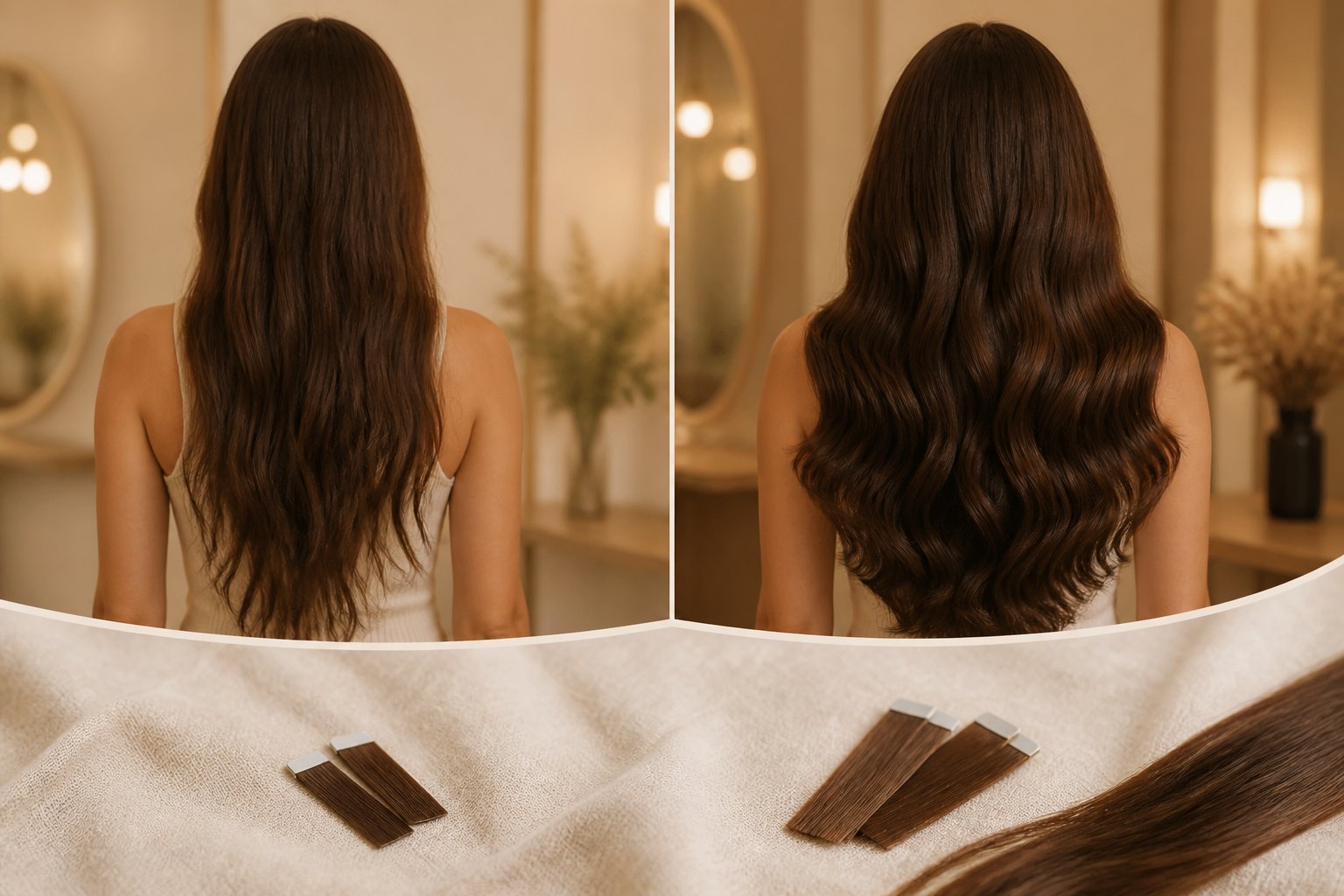
Client goals
Length, thickness — or both?
Someone wanting only thickness requires a completely different placement than someone wanting dramatic length.
- Ask: Are you looking for length?
- Ask: Are you looking for thickness?
- Ask: Or both?
- Goal determines number of tapes, placement, hair length, colour matching and budget.
Invisible Tape shown at true proportion — 4 × 0.8 cm
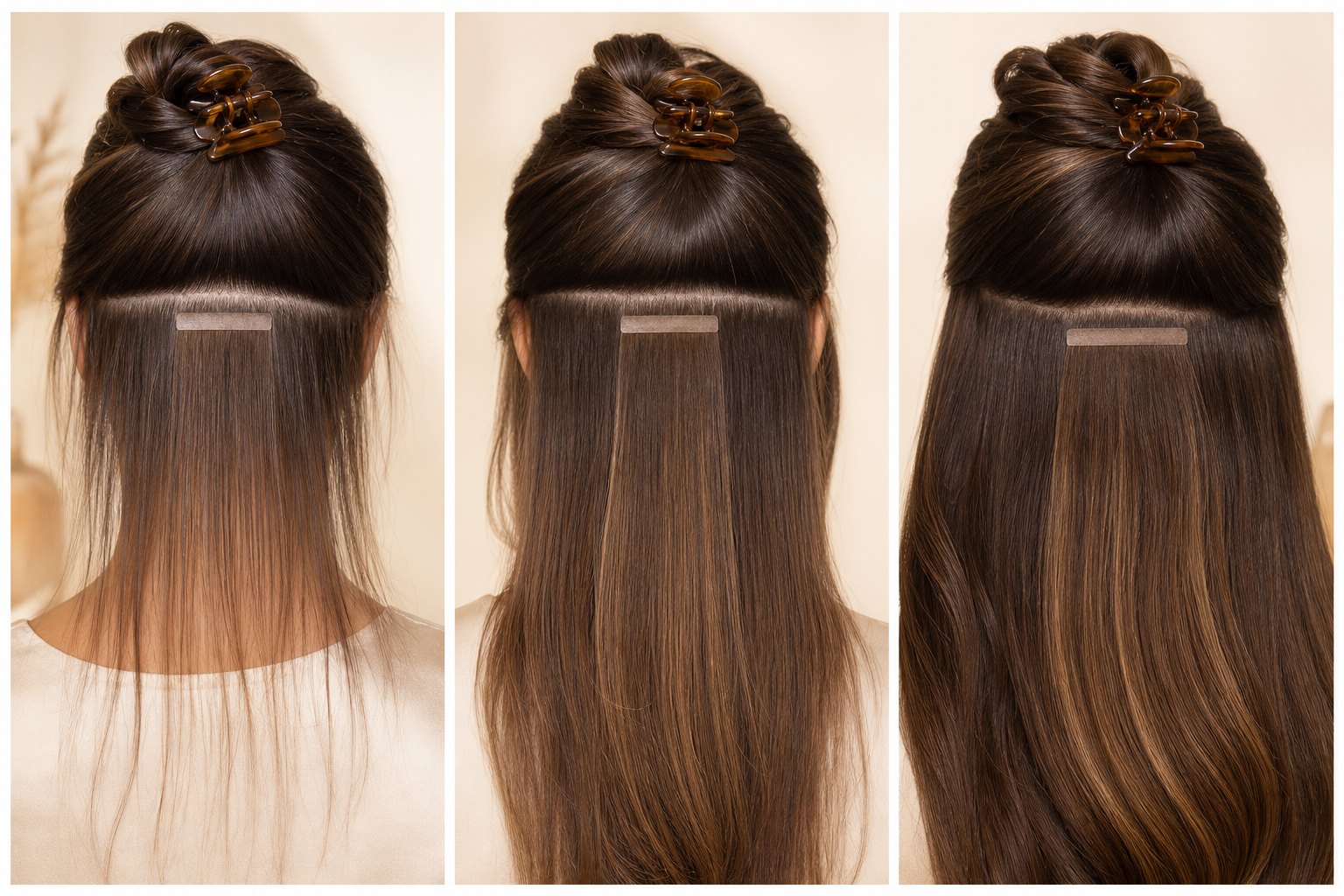
Hair density assessment
Not all hair is created equal
Hair density is one of the biggest deciding factors when choosing tape extensions. SUNDAY Invisible Tape wefts are 4 × 0.8 cm — discreet, but they still need suitable density to conceal.
- Assess: Fine · Medium · Thick
- Assess: Low density · High density
- Very fine hair may not conceal tapes correctly.
- Very thick hair may need additional rows — or a different method.
Invisible Tape shown at true proportion — 4 × 0.8 cm
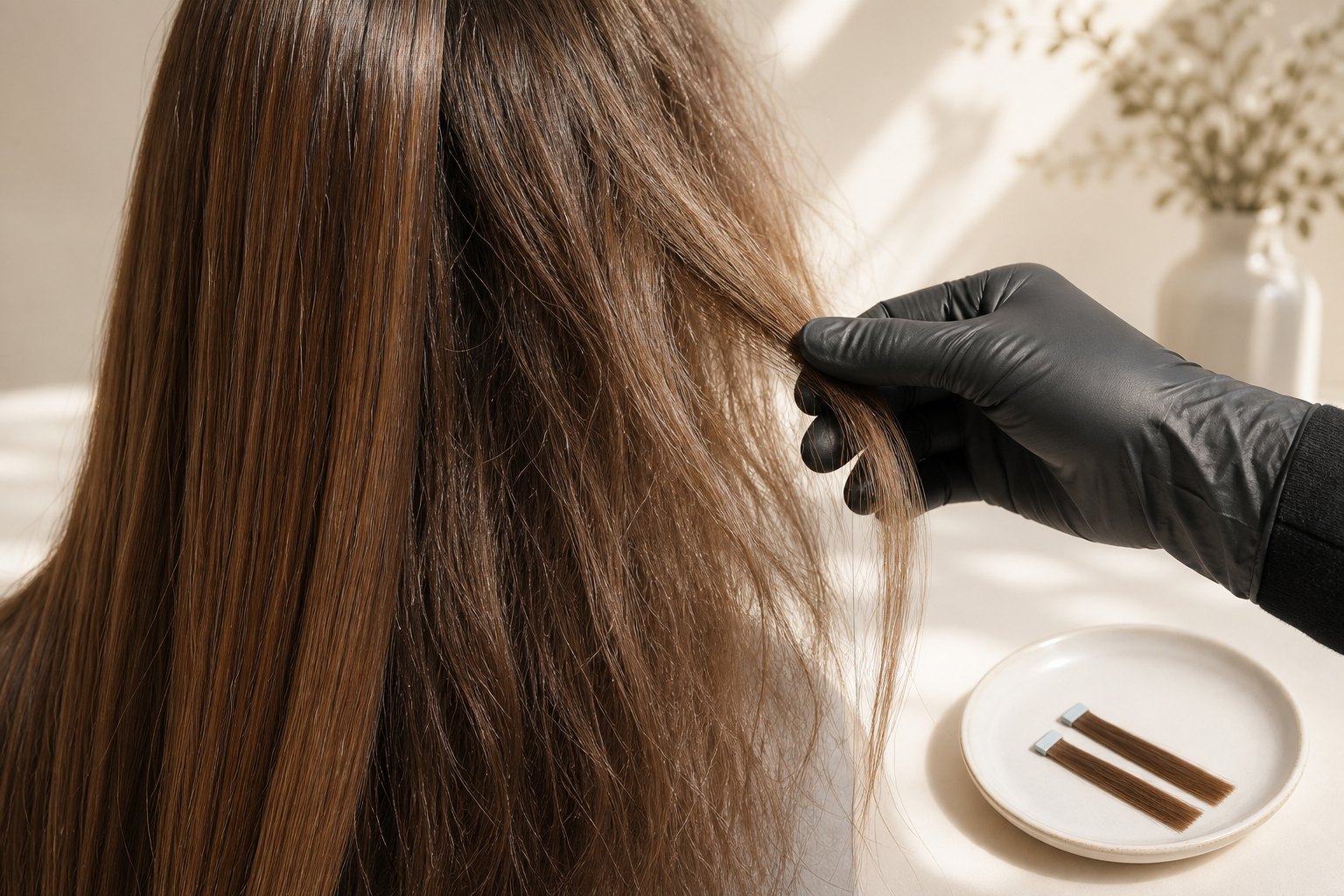
Hair quality
Look beyond density
Can the hair safely support extensions?
- Hair strength & elasticity
- Previous chemical services
- Heat damage, breakage & porosity
- Questions: Has it been bleached? Recently coloured? Is it breaking?
Invisible Tape shown at true proportion — 4 × 0.8 cm
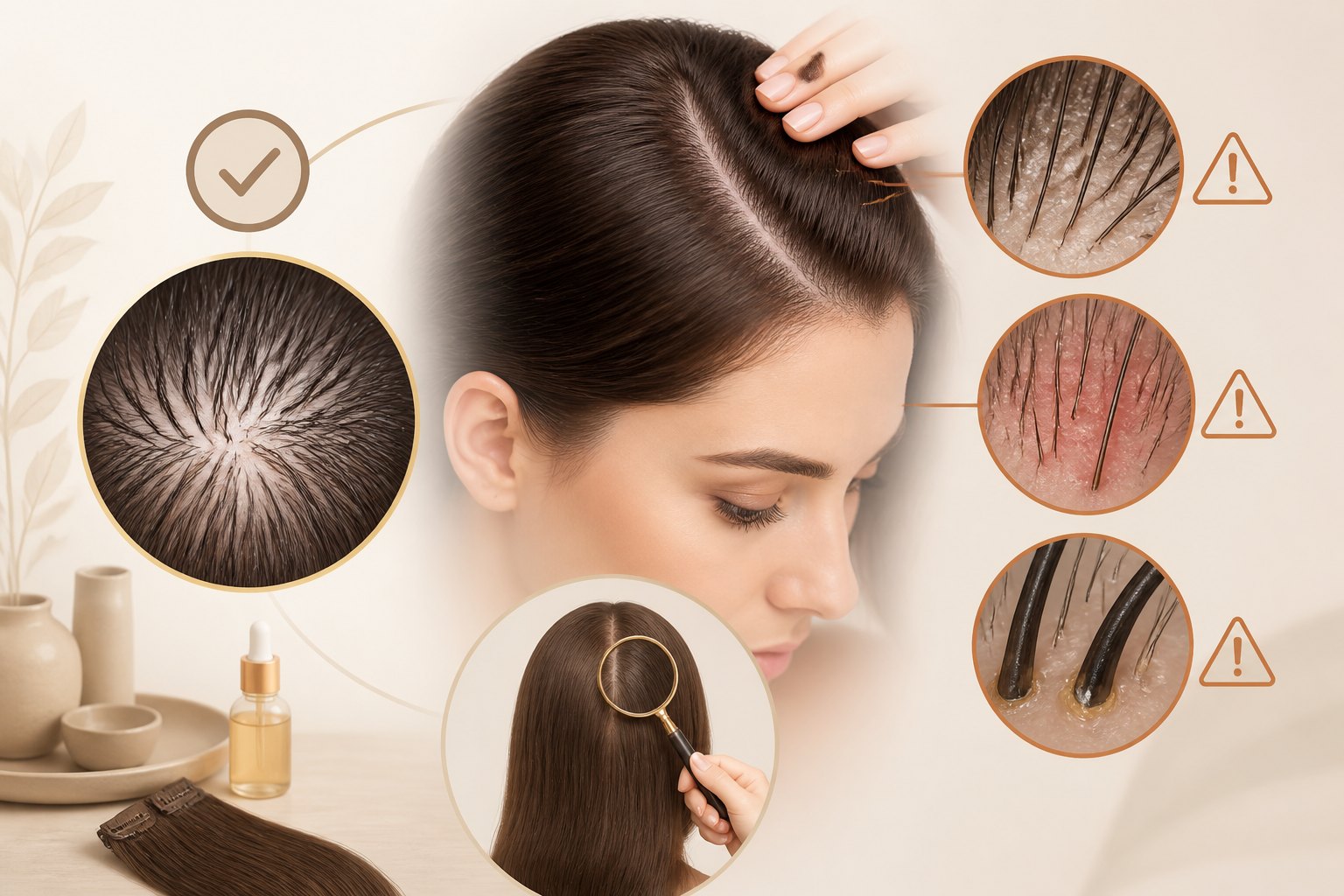
Scalp health check
Never skip the scalp assessment
Extensions should never be applied onto an unhealthy scalp.
- Check for psoriasis, eczema, dermatitis
- Open wounds, excessive irritation, active infections
- Severe dandruff or excessive sensitivity
- If something looks abnormal — stop and recommend medical advice.
Invisible Tape shown at true proportion — 4 × 0.8 cm

Lifestyle assessment
How do they live in their hair?
These answers influence whether tape extensions are the correct choice.
- High ponytails / hair regularly tied up
- Gym every day · swimming · hot yoga
- Helmet for work · motorbike · horse riding
- Heavy exercise routines
Invisible Tape shown at true proportion — 4 × 0.8 cm

Hair styling habits
Maintenance habits affect longevity
- How often do you wash your hair?
- How often do you straighten or curl?
- Do you air dry? Sleep with wet hair?
- Do you use professional products?
Invisible Tape shown at true proportion — 4 × 0.8 cm
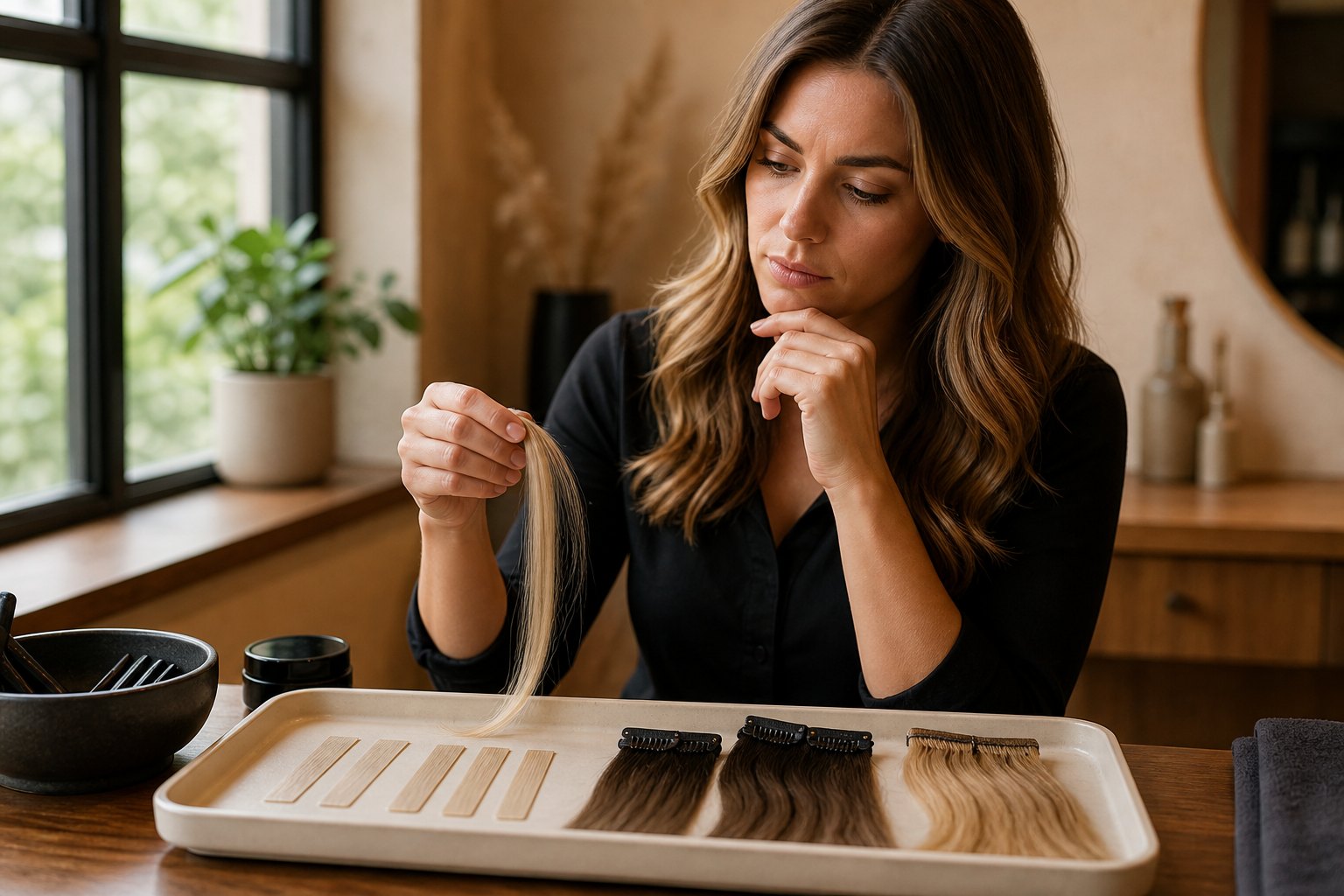
Method choice
Are tape extensions the best choice?
Sometimes… the answer is no.
- Is the hair too fine?
- Significant breakage or medical hair loss?
- Constant high ponytails?
- Would another extension method be more suitable?
- A professional isn’t afraid to say: “Tape extensions aren’t the best option for you.”
Invisible Tape shown at true proportion — 4 × 0.8 cm

Consultation red flags
Do NOT fit tape extensions if…
- The scalp is unhealthy
- Hair is actively shedding excessively
- Hair cannot safely support the weight
- Expectations are unrealistic
- The client refuses maintenance or correct aftercare
Invisible Tape shown at true proportion — 4 × 0.8 cm
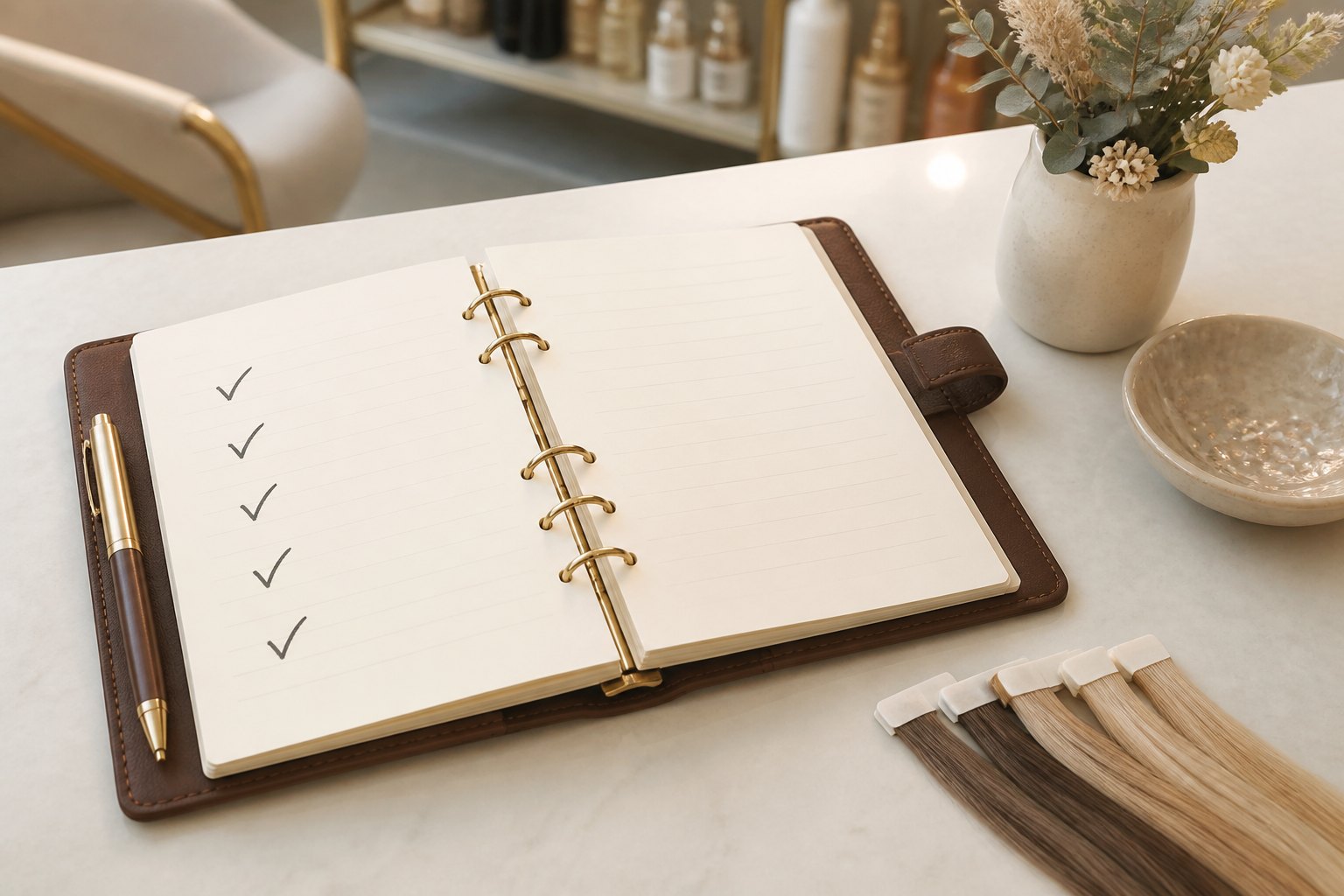
Consultation checklist
Before booking, ask yourself
- Healthy scalp
- Suitable hair & correct density
- Correct method
- Lifestyle considered
- Colour matched · expectations managed · maintenance explained
Invisible Tape shown at true proportion — 4 × 0.8 cm

End of Part 1
Key learning outcome
Consultation first. Always.
A successful extension service doesn’t begin with application — it begins with the consultation. This is where professionals protect the client’s hair, manage expectations, and choose the right solution.
Invisible Tape shown at true proportion — 4 × 0.8 cm